Ancestor Altars: A Vietnamese Heartbeat Echoing Through Generations
Ancestor Altars: A Vietnamese Heartbeat Echoing Through Generations
Hey friend! Have you ever walked into a Vietnamese home and felt a sense of peace and reverence, almost like stepping into a sacred space? Chances are, you were near the ancestor altar. It's more than just a piece of furniture; it's the beating heart of the family, a connection to those who came before, and a powerful symbol of Vietnamese culture.
Why Ancestor Altars Matter: Connecting the Past to the Present

For generations, ancestor veneration has been deeply woven into the fabric of Vietnamese society. It's not about worshipping the dead in a religious sense, but rather about honoring, remembering, and maintaining a relationship with our ancestors. We believe that our ancestors, even in the afterlife, continue to influence and guide our lives. The ancestor altar serves as a tangible bridge between the living and the deceased, allowing us to express our gratitude, seek guidance, and ensure their continued well-being in the spiritual realm.
Think of it like this: imagine your grandmother, always there with her wisdom and comforting presence. Even after she's gone, wouldn't you want to find ways to keep her memory alive, to ask for her advice in your heart, and to feel her love surrounding you? That's essentially what the ancestor altar provides. It's a focal point for remembering, respecting, and receiving the blessings of our lineage.
The Components of a Traditional Vietnamese Ancestor Altar

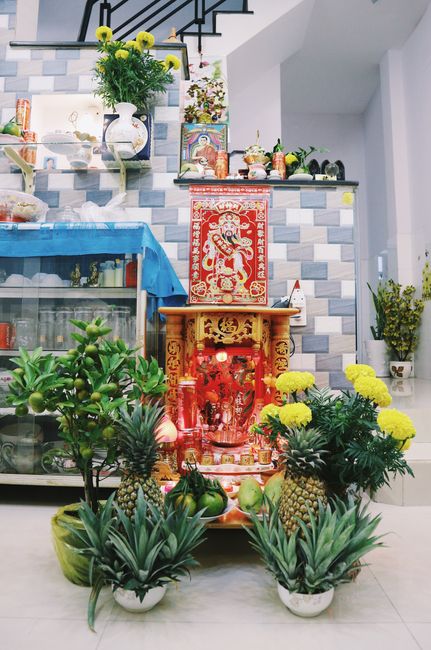
Okay, so what exactly goes into creating this sacred space? Well, every family's altar is unique, reflecting their individual history and preferences. But there are some common elements you'll typically find:
- Ancestor Tablets (Bài vị tổ tiên): These are perhaps the most important items. They are usually wooden tablets inscribed with the names and dates of birth and death of the deceased ancestors. They are treated with utmost respect and are considered to be the dwelling place of the ancestral spirits.
- Incense Burner (Bát hương): This is where incense sticks are burned daily, offering prayers and respect to the ancestors. The rising smoke is believed to carry the family's messages and requests to the spiritual realm.
- Candle Holders (Chân đèn): A pair of candle holders flank the incense burner, representing light and warmth. The candles are lit during ceremonies, anniversaries, and special occasions.
- Fruit Tray (Mâm ngũ quả): A tray of five different fruits (the selection can vary depending on the region and season) is placed on the altar as an offering. Each fruit symbolizes different aspects of life, such as prosperity, health, and good fortune.
- Flower Vase (Lọ hoa): Fresh flowers are displayed on the altar to bring beauty and fragrance to the space, symbolizing respect and reverence.
- Tea Cups (Chén trà): A set of small tea cups is placed on the altar, representing offerings of tea to the ancestors. Water or rice wine can also be offered.
- Photos of Ancestors: Many families include framed photographs of their deceased loved ones on the altar, creating a visual connection to their ancestors.
Sometimes, you might even see:
- Statues of Deities: While the primary focus is on ancestor veneration, some families also include statues of deities, such as the Buddha or Guan Yin, to seek blessings and protection.
- Personal Items: Cherished possessions of the deceased, like a favorite pipe, a piece of jewelry, or a book, might also be placed on the altar to honor their memory.
The placement of these items is important, too. Usually, the ancestor tablets are placed at the back of the altar, with the incense burner in front. The fruit tray, flower vase, and tea cups are arranged in front of the incense burner, creating a visually appealing and respectful display.
The Rituals and Ceremonies Surrounding the Ancestor Altar
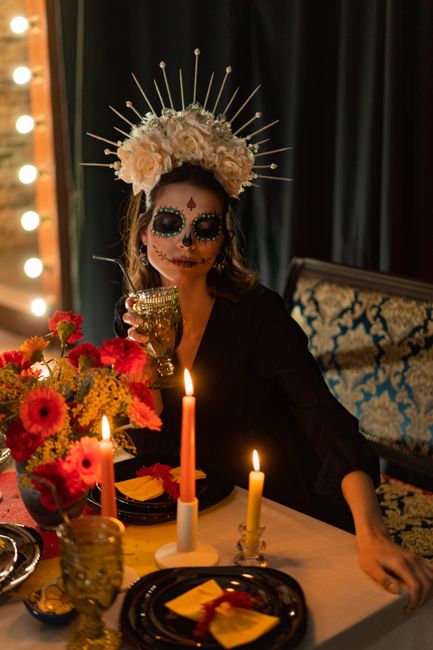
The ancestor altar isn't just for show; it's a place of active communication and connection. Several rituals and ceremonies are performed regularly to honor and seek guidance from our ancestors.
Daily Offerings: Many Vietnamese families burn incense sticks every morning and evening, offering prayers for the well-being of the family, success in their endeavors, and guidance from their ancestors. This daily ritual is a simple but powerful way to maintain a connection with the past.
Anniversary Celebrations (Ngày giỗ): These are perhaps the most important ceremonies associated with the ancestor altar. On the anniversary of a death, the family gathers to prepare a special meal, offer prayers, and remember the deceased. This is a time for storytelling, sharing memories, and reaffirming family bonds.
Tet (Vietnamese Lunar New Year): During Tet, the ancestor altar takes on even greater significance. The altar is meticulously cleaned and decorated, and special offerings are prepared, including traditional Vietnamese dishes like bánh chưng (sticky rice cake) and thịt kho tàu (braised pork with eggs). Ancestors are invited to return home and celebrate the New Year with the family.
Other Special Occasions: The ancestor altar is also honored during other important events, such as weddings, births, and major life decisions. Family members will often offer prayers and seek guidance from their ancestors to ensure success and good fortune.
The Significance of Incense and Offerings

You might be wondering why incense and offerings are so important in these rituals. Well, incense, as I mentioned earlier, is believed to carry our prayers and messages to the spiritual realm. The rising smoke symbolizes the connection between the earthly and spiritual worlds.
Offerings, whether they are fruits, flowers, tea, or food, are expressions of gratitude and respect. They are a way of providing for the ancestors in the afterlife and demonstrating our continued care for their well-being. It's like saying, "Thank you for all you've done for us. We remember you, and we honor you."
The types of offerings can vary depending on the occasion and the family's preferences. But the key is to offer them with sincerity and respect. Even a simple offering, presented with a genuine heart, is deeply appreciated.
The Location and Placement of the Ancestor Altar
Where you place the ancestor altar in your home is also significant. Traditionally, it's placed in the most prominent and respectful area of the house, usually the living room. This is a place where the entire family can gather and pay their respects.
The altar should ideally face the front door, allowing the ancestors to "see" the family and the activities of the household. It should also be placed at a height that is considered respectful, neither too high nor too low.
It's also important to keep the area around the altar clean and tidy. This demonstrates respect for the ancestors and creates a peaceful and reverent atmosphere. Many families will regularly clean the altar, dust the tablets, and replace the offerings.
Ancestor Altars in Modern Vietnamese Homes
While traditional practices remain strong, ancestor altars have also adapted to modern lifestyles. In smaller apartments or homes, the altar might be a smaller, more compact version. Some families even use wall-mounted shelves instead of traditional cabinets.
The essence of ancestor veneration, however, remains the same. Whether the altar is grand or simple, it continues to serve as a focal point for family connection, remembrance, and respect. Even Vietnamese families living abroad maintain ancestor altars in their homes, preserving their cultural heritage and passing it down to future generations.
The use of technology is even creeping in! I've seen some families use digital picture frames on their altars to display a slideshow of photos of their ancestors. It's a modern twist on a timeless tradition.
Personal Experiences and Insights
Growing up in a Vietnamese household, the ancestor altar was always a central part of my life. I remember my grandmother meticulously cleaning the altar every week, carefully dusting the tablets and arranging the offerings. She taught me the importance of honoring our ancestors and seeking their guidance.
Whenever I faced a difficult decision, I would often stand in front of the altar, light an incense stick, and ask for my ancestors' wisdom. It was a comforting feeling, knowing that I had their support and guidance. I always felt a sense of peace and connection in front of the altar.
Even now, living far from my family, I maintain a small ancestor altar in my home. It's a way for me to stay connected to my roots, to honor my heritage, and to feel the presence of my loved ones who have passed on. It's a reminder that I am part of a larger story, a lineage that stretches back generations.
I remember once, when I was feeling particularly lost and uncertain about my future, I spent some time in front of my ancestor altar, sharing my worries and asking for guidance. That night, I had a vivid dream about my grandfather, who was always a source of strength and wisdom in my life. In the dream, he offered me encouragement and advice, which helped me to regain my confidence and find my way forward. It was a powerful reminder of the enduring connection between the living and the deceased.
Conclusion: More Than Just a Tradition
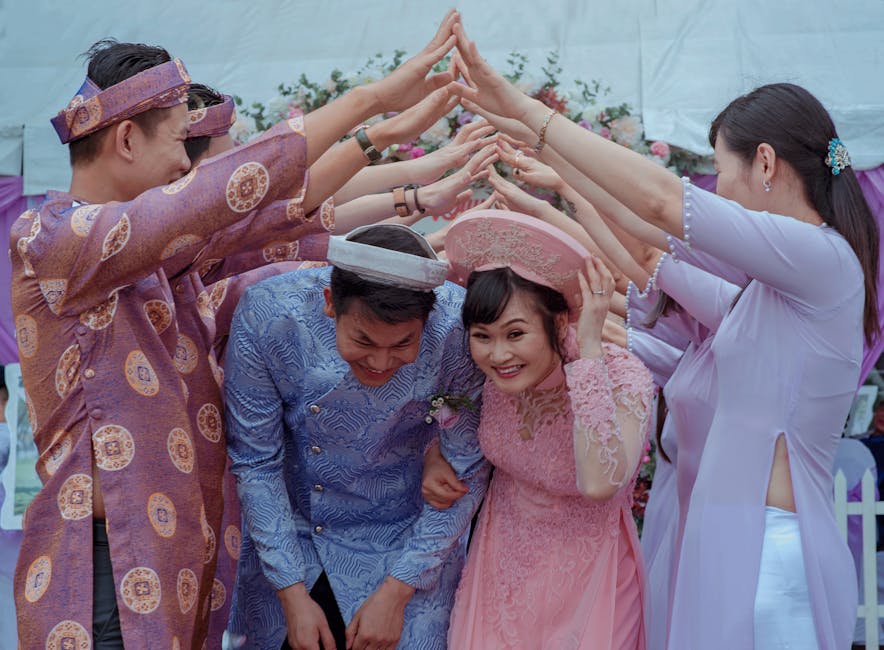
In conclusion, the ancestor altar in Vietnamese homes is far more than just a tradition; it's a profound expression of family, respect, and cultural identity. It's a tangible link to the past, a source of guidance in the present, and a legacy for the future. It reminds us of where we come from, who we are, and where we are going.
If you ever have the opportunity to visit a Vietnamese home, take a moment to appreciate the ancestor altar. It's a window into the heart and soul of Vietnamese culture, a testament to the enduring power of family and the importance of honoring those who came before us. It's a place of peace, reverence, and connection, where the past and the present meet, and where the spirit of our ancestors lives on.
So, the next time you see one, remember it's not just a pretty arrangement. It's a story, a connection, a tradition, and a vital part of what makes a Vietnamese home truly special. It's a Vietnamese heartbeat echoing through generations.

Post a Comment for "Ancestor Altars: A Vietnamese Heartbeat Echoing Through Generations"
Post a Comment